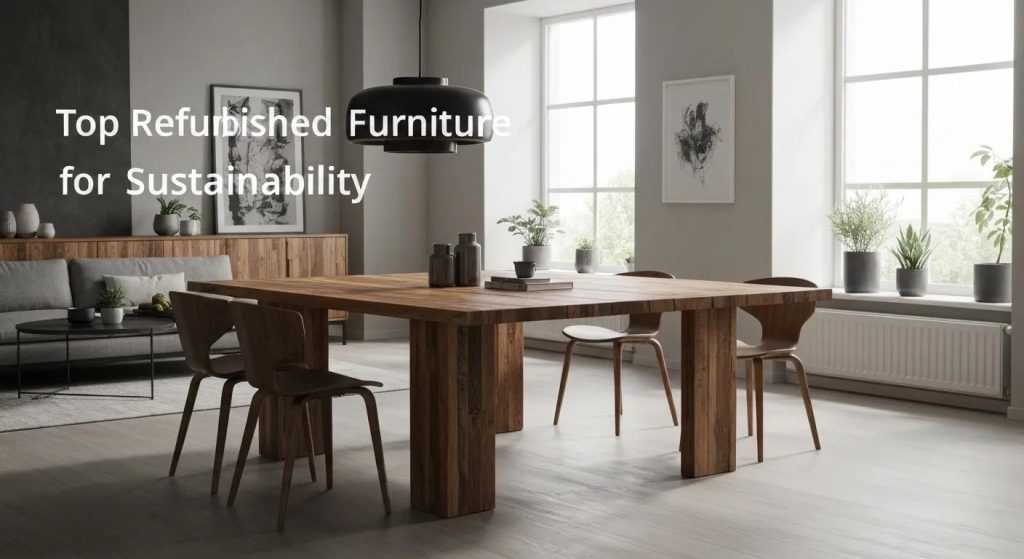
Top Refurbished Furniture for Sustainable Homes
Refurbished furniture reclaims existing wooden pieces through careful repair, sympathetic finishing and selective component replacement to extend service life and cut the environmental cost of new manufacture. This guide outlines which furniture types are most commonly refurbished, why they work well in sustainable homes and how restoration choices — materials, finishes and structural repairs — deliver both ecological and aesthetic value. You’ll find practical identification tips, typical refurbishment steps for dining tables, dressers, wardrobes and kitchen units, plus advice on finishes and materials that prioritise indoor air quality and longevity. The article maps common categories, compares material choices (including reclaimed wood), quantifies core benefits and previews bespoke kitchen approaches that make refurbishment a viable alternative to full replacement. Relevant search terms such as refurbished wooden furniture Harrogate, reclaimed wood furniture benefits and non-toxic furniture restoration finishes appear throughout to help homeowners and designers make informed choices.
HDS — Sustainable Refurbished Furniture (HDS) operates a visible local workshop and warehouse in Hampsthwaite, Harrogate (Unit 1B, Hollins Lane, Hampsthwaite, Harrogate HG3 2HL) where hand-painted tables and spray-finished wardrobes are on display and bespoke commissions are taken. If you’d like to compare examples before deciding, we welcome visits to the shop and enquiries about nationwide delivery and bespoke projects. This short local note underlines our commitment to transparency and trust; the rest of this article focuses on practical guidance for choosing and evaluating refurbished wooden furniture. Next, we list the furniture types that typically yield the greatest sustainability and user-value through careful refurbishment.
What Are the Most Commonly Refurbished Furniture Types for Sustainable Homes?
Pieces that are frequently refurbished share three practical traits: solid construction, repairable or replaceable components, and large surfaces where new finishes restore both protection and appearance. Dining sets, dressers and cabinets, wardrobes and bedroom storage, sideboards and console tables, and upholstered seating regularly arrive in workshops because their cores are usually sound and visible improvements are cost-effective. Homeowners pick these categories when durability, bespoke finishes and lower embodied carbon matter — a single repair or repaint can add many years to a piece’s life. Below we list the top categories, explain why each suits sustainable refurbishment and summarise the typical interventions for each group.
The following list highlights the most frequently refurbished furniture types and the main reason each is chosen for restoration.
- Dining tables & chairs: Solid timber tops and legs take re-sanding, structural repair and new finishes, restoring both function and style.
- Dressers & cabinets: Large surfaces and storage value make them ideal for painting, new knobs and targeted structural work.
- Wardrobes & bedroom furniture: Customisation and low‑VOC finishes improve indoor air quality while extending service life.
- Sideboards & console tables: Decorative tops and detail respond well to reclaimed wood inserts or refreshed hardware.
- Seating (chairs & sofas): Frames and legs are often repairable; upholstery can be renewed with sustainable fabrics.
These categories combine structural resilience with obvious visual benefit from modest interventions, so refurbishment is often an efficient, sustainable choice. Knowing why each type performs well helps homeowners prioritise pieces for restoration and discuss realistic outcomes with a local workshop or refurbisher.
Why Are Dining Tables and Chairs Ideal for Refurbishment?
Dining tables and chairs are commonly built from solid hardwoods or engineered constructions with solid components that tolerate sanding, joint repair and re-finishing. The tabletop, apron and leg joinery typically allow straightforward structural work and replacement of worn parts such as runners or tabletop inserts. Because a change of paint, stain or a reclaimed wood top can transform the look of a set, one restoration can refresh a room’s character without replacing the core structure. Homeowners often see both cost and carbon savings when a durable dining set is refreshed rather than discarded, and this low-disruption approach preserves provenance and material quality for future reuse.
Typical refurbishment for a dining set is simple to describe: tighten or repair joints, re-level legs, re-sand surfaces, finish with low‑VOC stains or paints and replace or upgrade hardware to suit the chosen aesthetic. These steps restore safety and appearance while retaining the table’s embodied energy, which is why dining sets are a high-impact target for sustainable refurbishment.
How Do Dressers and Cabinets Support Eco-Friendly Upcycling?
Dressers and cabinets often have solid carcasses with interchangeable fronts, so cosmetic updates produce a big visual change for relatively little material. Their broad surfaces and drawers lend themselves to hand‑painting, glazing, new knobs and runner upgrades, plus targeted repairs to dovetails or drawer bases. Because storage furniture is functionally valuable, restoring capacity and improving finishes reduces the need to buy new storage that would consume fresh timber and manufacturing energy. Choosing reclaimed or sustainably sourced topcoats and low‑VOC paints also helps indoor air quality while delivering bespoke finishes.
Small refinements — soft‑close runners, hand-painted motifs or replacing damaged veneers — are cost-effective steps that can extend a dresser’s service life by a decade or more. Those modest changes deliver outsized sustainability benefits because they preserve the main structure and only replace low‑impact components when necessary.
Which Sustainable Wooden Furniture Options Offer the Best Eco Benefits?
Comparing wooden options reveals clear trade-offs between aesthetic value, embodied carbon and refurbishment complexity; reclaimed wood frequently offers the strongest combined environmental and stylistic benefits. Reclaimed timber reduces demand for freshly sawn wood, brings a distinctive patina and typically needs less kiln drying than new lumber, lowering the embodied carbon of the finished piece. Solid hardwoods provide longevity and repairability, while engineered boards may require more component replacement over time. Below is a concise comparison to help homeowners weigh choices when selecting furniture for refurbishment or commissioning bespoke projects.
| Furniture Type | Typical Material | Environmental Benefit | Typical Refurbishment Actions |
|---|---|---|---|
| Dining Table | Solid oak, reclaimed pine | Long lifespan; high reuse value | Re-sand top, leg repair, low‑VOC oil or paint |
| Dresser/Cabinet | Solid hardwoods, veneered ply | Preserves storage capacity; avoids new manufacture | Replace hardware, paint/glaze, repair drawers |
| Wardrobe/Bedroom | Solid frames, engineered carcasses | Custom sizing reduces need for new production | Refinish doors, upgrade hinges, bespoke interiors |
| Sideboard/Console | Reclaimed tops, mixed timbers | High visual impact with reclaimed materials | Add reclaimed surface, new knobs, structural reinforcement |
This comparison highlights how material choice affects both environmental impact and practical refurbishment steps. Choosing reclaimed or durable hardwoods typically yields the best eco-benefit, since these materials add less additional embodied carbon when refurbished than newly manufactured equivalents.
What Makes Reclaimed Wood a Preferred Material for Refurbished Furniture?
Reclaimed wood is prized for its seasoned stability, distinctive grain and lower embodied carbon compared with freshly milled timber — qualities that make it especially suited to visible tabletops, door faces and accent panels. Because reclaimed boards have often dried over many years they are less prone to warping, and their patina delivers a unique aesthetic that new timber cannot replicate. Environmentally, reusing timber diverts material from landfill or incineration and reduces demand for new logging and milling. Reclaimed boards require careful preparation — de‑nailing, re‑sawing and planing — but the sustainability and visual rewards usually justify the extra craft time.
When reclaimed wood is used in a refurbish project, craftsmen can either match finishes to existing timbers or deliberately contrast textures for a contemporary look. Choosing reclaimed material signals a circular approach to furniture making that lowers resource consumption and supports long‑lasting design.
How Does Refurbished Bedroom Furniture Contribute to Sustainable Living?
Bedroom furniture — wardrobes, bedframes and dressers — makes a significant contribution to sustainable homes because refurbishment can tailor storage to exact spatial needs, reducing the impulse to buy mass‑produced replacements. Repairs to frames, door replacement or reconfiguring interiors extend utility and avoid the disruption of removing fitted carpentry. Using low‑VOC finishes and natural oils during refurbishment also improves indoor air quality, a real benefit in bedrooms where people spend long periods. The ability to customise dimensions and finishes means refurbished bedroom furniture adapts as lifestyles change, without generating the emissions of full replacement.
By prioritising durable joinery and sustainable finishes, homeowners increase a piece’s lifespan and cut landfill waste. This lifecycle approach — repairing and adapting rather than discarding — is a practical route to lower household environmental impact while keeping design flexibility.
What Are the Key Benefits of Choosing Refurbished Furniture for Your Home?
Choosing refurbished furniture delivers three linked benefits: environmental savings from reduced material demand and waste, financial value compared with buying new bespoke pieces, and unique aesthetics that support personalised interiors. Refurbishment preserves embodied carbon, diverts solid wood from landfill and is often considerably cheaper than commissioning new furniture of similar quality. For homes where low toxicity matters, specifying non‑toxic paints and natural waxes during refurbishment reduces indoor pollutants while keeping characterful pieces in active use. Below is a simple comparison of environmental and financial metrics homeowners typically expect from refurbishment.
| Benefit | Attribute | Typical Value / Estimate |
|---|---|---|
| Waste diversion | Material saved from landfill | Tens to hundreds kg per large piece (estimate) |
| Cost savings | Typical saving vs new comparable piece | 30–60% cost reduction (estimate) |
| Carbon reduction | Embodied carbon avoided | Noticeable reduction relative to new manufacture (estimate) |
| Indoor air quality | VOC exposure reduction | Lower when low‑VOC finishes used |
How Does Refurbished Furniture Reduce Environmental Impact?
Refurbishing furniture reduces environmental impact mainly by extending service life and avoiding the energy and emissions associated with producing new pieces. Repair and selective replacement conserve the embodied energy already invested in timber and hardware, while reusing reclaimed wood cuts demand for fresh harvesting. Choosing non‑toxic finishes and durable hardware reduces the need for frequent rework and helps indoor environmental quality. Altogether, these practices support a circular economy where materials remain in productive use rather than becoming waste.
Exact savings vary by item and the alternative product, but the consistent outcome is less material extraction, lower manufacturing emissions and reduced waste. The lifecycle advantage is particularly strong for long‑lived solid‑wood pieces that can be repaired repeatedly.
Sustainable Furniture Industry: Reduce, Reuse, Recycle Strategies
This review examines sustainable practices across the furniture industry, centred on reduce, reuse and recycle principles. Drawing on literature from databases such as Scopus, Web of Science and Google Scholar, it highlights strategies to minimise resource use, extend product lifespans and improve material recovery. Alongside these pillars the analysis also notes complementary ideas — for example, “rethink” and “refuse” — which encourage a critical reassessment of unsustainable practices. Despite varied methods and focus areas, the synthesis stresses the need for standardised approaches to tackle environmental challenges across the furniture lifecycle and calls for further research. Reducing, reusing, and recycling in the furniture industry: A mini-review, 2024
Why Is Upcycled Furniture a Cost-Effective and Unique Style Choice?
Upcycled furniture delivers bespoke character at a fraction of the cost of new custom pieces because the main structure is already in place and only targeted materials or finishes are required. Hand‑painted detail, replaced hardware or reclaimed timber accents create one‑off pieces that resist mass‑market trends and encourage long‑term use. For homeowners who value individuality and quality, refurbishment offers high design return on modest investment. Well‑executed upcycling can also increase resale and heritage value thanks to improved aesthetics and documented craftsmanship.
Stylistically, refurbished pieces can bridge traditional and contemporary tastes by pairing classic joinery with modern finishes. This hybrid approach lets homeowners create distinctive interiors while keeping expenditure and environmental impact lower than commissioning new bespoke furniture.
How Does the Eco-Friendly Furniture Restoration Process Work?
An eco‑friendly restoration commonly follows a five‑step workflow: assessment, structural repair, component replacement only where necessary, surface preparation and low‑VOC finishing. This sequence prioritises repair over replacement, reuses salvageable materials and selects finishes that minimise indoor emissions, producing durable, healthy results. Timelines vary by scale, but clear communication about methods, materials and expected lifespan helps homeowners make confident choices. The table below breaks down process stages, typical methods and sustainable material options so you know what to expect from a conscientious restoration.
| Phase | Method | Sustainable Materials / Outcome |
|---|---|---|
| Assessment | Condition survey, joinery check | Reuse plan; salvage recommendations |
| Repair | Joinery, leg/joint reinforcement | Solid wood repairs; reused components |
| Component Replacement | Hinges, runners, upholstery | Durable hardware; recycled/upcycled parts |
| Surface Prep & Finish | Sanding, priming, coating | Low‑VOC paints, natural oils/waxes |
| Final Fit | Quality check, hardware fit | Extended lifespan; reduced rework |
What Sustainable Methods Does HDS Use in Furniture Refurbishment?
At HDS we favour a repair‑first approach and use sustainable materials wherever practical: structural repairs and part replacement are preferred over full rebuilds, finishes are chosen for low‑VOC profiles, and reclaimed timber is used when appropriate. Our workshop displays visible examples such as hand‑painted tables and spray‑finished wardrobes, and we accept bespoke commissions for tailored sizing or unique finishes. We also offer nationwide delivery, while keeping the core refurbishment work local to our Hampsthwaite warehouse and shop. Being open about methods and services helps clients balance design, cost and environmental priorities when commissioning work.
Repair‑first practices, low‑toxicity finishes and material reuse support both the circular economy and healthier indoor environments, aligning craft with sustainability goals.
Recycling Furniture: Ecological, Economic, and Social Benefits
This account describes a community furniture recycling project. Over a summer, the organisers collected donated furniture across Suffolk County (Long Island), partnered with Habitat for Humanity and stored items at a local school. Volunteers helped refinish and restore pieces, which were then passed to Habitat families in need. The project highlights social as well as environmental benefits: salvaging furniture reduces costs for recipients and keeps materials in use rather than heading to landfill. Recycling Furniture: The ecological, economic and social benefits, 2012
Which Materials Are Essential for Sustainable Furniture Restoration?
Sustainable restorations rely on a short list of high‑impact materials: reclaimed or well‑seasoned hardwoods for structural repairs, low‑VOC paints and water‑based stains for surfaces, natural oils and waxes for durable finishing, and high‑quality long‑life hardware to reduce future replacements. For upholstery choose recycled or natural‑fibre fabrics and eco‑friendly foams where necessary. Using FSC‑certified or reclaimed wood for new components further lowers the lifecycle footprint of a restored piece. These material choices focus on longevity, indoor air quality and reduced embodied carbon throughout the restoration process.
Homeowners should request material details and finish specifications before commissioning work to ensure choices match their sustainability and health objectives.
What Future Trends Are Emerging in Bespoke Refurbished Kitchens?
Bespoke refurbished kitchens are gaining traction because kitchen carcasses are often structurally sound and can be refreshed with new doors, worktops and hardware instead of wholesale replacement — a route that saves significant materials and carbon. Designers increasingly combine reclaimed wood panels, mixed‑material worktops and modular inserts to create contemporary looks while retaining existing carcasses. Modular approaches also allow phased upgrades — refurbish the busiest zones first — so homeowners avoid the disruption and waste of a complete gut‑out. As demand grows, early adopters focus on bespoke sizing, integrated storage and specifying low‑VOC finishes to keep interiors healthy and long‑lived.
Design trends favour mixed textures and modularity, making older kitchens strong candidates for a sustainable refresh. For homeowners interested in commissioned refurbished kitchens: kitchen projects are coming soon at local workshops; enquiries for early bespoke commissions are welcome so projects can be scoped and materials planned responsibly.
How Can Kitchen Units Be Refurbished for Sustainable Modern Homes?
Refurbishing kitchen units usually starts with assessing carcass condition: where carcasses are sound, doors can be replaced, surfaces re‑painted or wrapped, hardware upgraded and worktops resurfaced or replaced with reclaimed timber or low‑impact composites. Plumbing and appliance interfaces are integrated during the refresh to ensure modern functionality without full demolition. If carcasses are beyond economic repair, salvaging hardware and selectively reusing components still reduces waste. Practical before/after approaches include replacing doors, adding modern drawer systems and choosing durable low‑VOC finishes to secure a long service life.
This targeted refresh strategy lowers material use and embodied carbon compared with new kitchens and allows homeowners to adapt layouts incrementally as budgets and needs evolve.
Why Is Sustainable Kitchen Design Important for Eco-Friendly Living?
Kitchens are one of the largest material investments in a home, so making them last through refurbishment delivers outsized environmental returns by avoiding demolition and new production emissions. Sustainable kitchen design considers embodied carbon, material recyclability, indoor air quality from low‑VOC finishes and the potential for modular future upgrades. Prioritising durable hardware and replaceable surfaces ensures long‑term adaptability and reduces the likelihood of full replacements. From a lifecycle viewpoint, refurbishing and upgrading kitchens incrementally aligns everyday practice with circular economy principles.
By planning for longevity and adaptability, homeowners achieve both ecological benefit and resilient, customised kitchens that meet modern needs without the environmental cost of a full rebuild.
How Can You Identify Quality Furniture Suitable for Refurbishment?
Spotting refurbishable furniture means assessing construction, material integrity and the nature of any damage. Robust joinery, solid hardwoods and intact frames are positive signs a piece can be profitably restored. Items with surface wear, missing hardware or veneer damage are often good candidates because those issues are simpler and cheaper to remedy than structural rot or widespread insect damage. Ask for before‑and‑after photos, enquire about repair methods and check whether a workshop provides warranties or clear finish specifications — these steps help you verify a trusted refurbisher. Below is a short checklist to use when evaluating pieces in person or online.
Use this quick checklist when assessing a piece for refurbishment:
- Check Joinery: Inspect dovetails and mortise‑and‑tenon joints for tightness and repairability.
- Assess Wood Integrity: Look for rot, deep splits or insect galleries — surface scratches are far easier to fix than structural decay.
- Inspect Hardware & Fittings: Determine whether runners, hinges and feet can be repaired or replaced cost‑effectively.
These checks help buyers make informed decisions about restoration potential and likely costs. After evaluating a piece, the next step is to contact a local workshop with photos and request a condition assessment before committing.
What Are the Signs of Durable and Refurbishable Wooden Furniture?
Durable, refurbishable pieces typically show solid joinery (dovetails, mortise‑and‑tenon), notable mass that suggests hardwood and repairable damage such as surface scratches or loose joints rather than deep rot. Weight and sound are useful indicators — solid hardwood frames give a firm, ringing tap and drawers that slide smoothly may only need runner adjustment. Veneers can be re‑adhered or replaced if the substrate is sound, while extensive rot or insect damage points to costly remediation. Requesting a detailed workshop assessment helps homeowners weigh repair costs against the piece’s value and provenance.
Knowing these signs lets buyers prioritise high‑return refurbishments that save both money and environmental impact compared with full replacement.
Where Can You Find Trusted Local Refurbished Furniture in Harrogate?
To find reputable local refurbishers, check local business listings, visit visible workshops and ask to see past work and material specifications before commissioning a job. Sustainable Refurbished Furniture By HDS (HDS) runs a warehouse and shop in Hampsthwaite, Harrogate where visitors can view hand‑painted tables, spray‑finished wardrobes and discuss bespoke commissions in person, with nationwide delivery available. When evaluating providers, ask about finish materials (low‑VOC paints, natural oils), whether reclaimed timber is used and how the workshop documents before‑and‑after work. Seeing craft processes and a portfolio of completed commissions in person builds trust and helps you choose a refurbisher confidently.
Visiting a workshop lets you inspect workmanship, understand timelines and ensure the chosen approach matches both your design and environmental priorities.
Frequently Asked Questions
What is the difference between refurbished and upcycled furniture?
Refurbished furniture is restored to improve function and appearance while keeping the original structure — repairs, refinishing and component replacement are typical. Upcycled furniture repurposes or reinvents old items into new or different uses, often changing form as well as function. Both reduce waste, but refurbishment focuses on repair and reuse of the original piece, while upcycling emphasises creative transformation.
How can I maintain the quality of refurbished furniture?
To keep refurbished furniture in good condition, clean gently with non‑abrasive products and avoid prolonged exposure to direct sunlight or extreme humidity. Use coasters and placemats to protect surfaces from heat and moisture, check for loose joints or hardware periodically and address issues promptly. Reapplying a low‑VOC wax or oil as recommended will help preserve the wood and maintain appearance over time.
Are there specific finishes that are better for indoor air quality?
Yes — low‑VOC (volatile organic compounds) finishes are recommended for better indoor air quality because they emit fewer harmful chemicals than traditional products. Natural oils and waxes are also good options, offering protection while being more eco‑friendly. When choosing finishes, look for products labelled low‑VOC, water‑based or non‑toxic to ensure healthier indoor environments.
What are the cost benefits of choosing refurbished furniture?
Refurbished furniture can deliver significant savings — typically 30–60% less than buying a new, comparable piece — because refurbishment reuses much of the original material and cuts manufacturing costs. Refurbished items also offer unique character and quality that can add perceived value to a home, making them a practical and economical choice.
How can I find a reliable refurbisher for my furniture?
Research local workshops, read customer reviews and visit in person to assess craftsmanship. Ask for examples of past work, material specifications and any warranties offered. Personal recommendations from friends or community groups can also point you to dependable refurbishers who prioritise quality and eco‑friendly practices.
What types of furniture are most suitable for refurbishment?
Pieces most suitable for refurbishment are typically solid wood items such as dining tables, chairs, dressers and wardrobes. These usually have durable construction and respond well to repair and refinishing. Look for furniture with replaceable components and limited structural damage, as these characteristics make the best candidates for restoration and significant improvement without full replacement.
Can refurbished furniture be customized to fit my style?
Absolutely. One of the main advantages of refurbishment is the ability to customise finishes, colours and hardware so a piece fits your style. Refurbishers commonly offer options that let you choose modern or traditional looks, ensuring the finished piece complements your home while retaining its original character.
Conclusion
Choosing refurbished furniture supports sustainable living by reducing waste and conserving resources while offering unique pieces that add character to your home. By prioritising quality materials and eco‑friendly finishes, homeowners enjoy long‑lasting furniture that contributes to healthier indoor environments. Working with local refurbishers enables personalised designs that reflect individual taste and environmental responsibility. Discover the potential of refurbished furniture and explore our collection today.