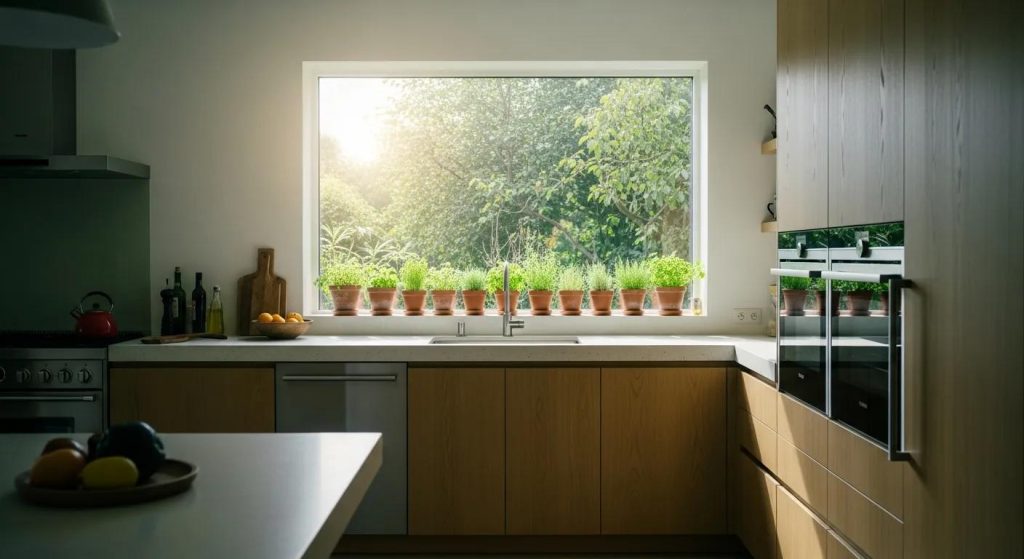
Eco-Friendly Kitchen Inspiration — Practical, Stylish, Sustainable
A dream kitchen is more than looks — it balances function, feel and responsibility. This guide covers eco-friendly furniture, bespoke solutions, layout tips, refurbished cabinets, sustainable flooring and how interior designers can help you create a beautiful, durable kitchen that’s kinder to the planet.
What are the best kitchen layout ideas for sustainable, functional spaces?
Layout determines flow, storage and daily energy use. L-shape opens circulation in small rooms, U-shape adds prep and storage, and galley keeps everything close. Smart placement of appliances, storage and windows reduces wasted movement and reliance on artificial lighting, heating or cooling.
The way a kitchen is designed has a real effect on daily resource use — something researchers have highlighted when looking at how people live with and change their kitchens.
Sustainable Kitchen Design: Resource Use & Layout
This study explored how everyday use and periodic changes to kitchens affect a home’s environmental footprint. Through 20 household interviews and a focus group, researchers found that typical kitchen designs often fail to encourage resource-efficient habits. Key opportunities for saving energy and water include well-planned storage, clearly defined workspaces and built-in functions that make efficient use of appliances and utilities.
Traditional kitchen design for sustainable low-income dwellings in developing countries, 2018
How to choose eco-friendly kitchen furniture that fits your layout
Choose furniture for materials, durability and fit. Reclaimed timber and bamboo are sustainable and long-lasting; multifunctional pieces — e.g., an island with storage — improve workflow. Ensure finishes, scale and hardware complement your layout so the space feels unified.
Material choice matters: research shows eco-focused furniture design prioritises low-impact, recyclable and health-conscious materials.
Eco-Friendly Furniture Design: Sustainable Materials & Practices
As resources become scarcer and production scales up, furniture design must respond with lower-impact solutions. Studies supporting eco-friendly design encourage both manufacturers and designers to favour materials and processes that minimise harm to nature and human health. Choosing natural, recyclable and sustainably sourced materials reduces environmental damage while maintaining product quality and durability.
Eco-friendly approach in furniture design, 2015
Which kitchen layouts maximise space and sustainability?
Layouts can be adapted for storage and efficiency: L-shape for circulation, U-shape for workspace and storage, open shelving to reduce cabinetry. Tailor storage, lighting and appliance placement to minimise waste and energy use.
How can refurbished kitchen cabinets enhance your dream kitchen design?
Refurbished cabinets cut waste, often lower costs and add character. Reusing well-made cabinetry supports the circular economy and lets you allocate budget to countertops, appliances or bespoke elements. With proper finish and hardware they work in modern designs.
What are the benefits of using refurbished cabinets in UK kitchens?
In the UK refurbished cabinets are usually cheaper, reduce landfill and are often durable. Saving on cabinetry frees budget for higher-grade worktops or appliances while keeping a sustainable focus.
How to integrate refurbished cabinets with bespoke kitchen designs
Blend refurbished and bespoke by matching finishes, tones and hardware. Use contrast—like a rustic cabinet with a sleek countertop—or aim for uniform finishes so refurbished elements feel deliberate.
What sustainable kitchen flooring options complement eco-friendly interiors?
Flooring choices affect durability and indoor health. Bamboo, cork and reclaimed wood are lower-impact options that reduce synthetic materials. Choose floors that suit wear patterns and your visual plan.
Which flooring materials are best for sustainable kitchen spaces?
Bamboo is renewable and hard-wearing; cork offers insulation and comfort; reclaimed wood adds warmth and reduces demand for new timber. Select the material that fits your lifestyle and maintenance preferences.
How to coordinate flooring choices with bespoke kitchen furniture
Coordinate by colour, texture and scale. Light floors open a room, contrasting with darker cabinets; matching tones create a calm, continuous look. Consider how finishes age so the palette remains cohesive.
How do interior design services help you commission your bespoke kitchen?
Interior designers manage concept, materials and installation. They balance style, ergonomics and sustainability, advise on finishes and layouts, and oversee manufacture and installation to keep the project on brief and timeline.
What to expect when commissioning bespoke kitchen furniture from UK experts
Commissioning bespoke furniture usually begins with a consultation, measurement and design proposals. Designers refine plans with your feedback and coordinate manufacture and install to deliver the finished kitchen.
How interior designers incorporate sustainability into kitchen spaces
Designers specify low-impact materials, efficient layouts and reuse where possible — for example refurbished components or local makers. They also recommend long-lasting finishes and energy-efficient appliances to reduce lifetime impact.
For more information or to start your project, you can get in touch today. If you’re looking for inspiration and solutions for your kitchen, Furniture by HDS has a range of options to help you plan and build the kitchen you want. Explore our shop to find pieces that fit your design and sustainability goals.
Frequently Asked Questions
What are the key benefits of an eco-friendly kitchen design?
Eco-friendly design reduces environmental impact, improves indoor air quality and can lower running costs. Using sustainable materials, efficient appliances and good ventilation improves comfort and durability.
How can I make my kitchen more energy-efficient?
Use energy-rated appliances, LEDs and sensible appliance placement to cut waste. Maximise natural light and ventilation, improve insulation, and use simple controls like timers or smart thermostats.
What are some tips for maintaining eco-friendly kitchen furniture?
Maintain furniture with gentle cleaning, low‑VOC cleaners, and periodic oiling or waxing for solid wood. Fix wear early to extend lifespan.
How can I incorporate plants into my eco-friendly kitchen design?
Add herbs and hardier houseplants to improve air quality and cooking access. Use pots with drainage and place plants where they receive sufficient light and care.
What are the advantages of using sustainable materials in kitchen renovations?
Sustainable materials lower environmental impact, often increase durability and reduce harmful chemicals. Options like bamboo, reclaimed wood and recycled metals create character while supporting responsible production.
How can I ensure my kitchen design is future-proof and adaptable?
Design for flexibility: use modular units, neutral finishes and durable materials. Keep layouts easy to reconfigure, allow technology upgrades and plan for accessibility so the kitchen adapts over time.
Conclusion
An eco-friendly kitchen pairs thoughtful choices with lasting style. Using refurbished cabinets, sustainable materials and considered layouts reduces environmental impact and improves daily life. If you’re ready, explore our eco-focused options and let us help turn your ideas into a practical, beautiful kitchen.